
Migrant workers protect themselves from forced labour in Malaysia
As part of the ElectroPower project, Electronics Watch and IndustriALL South East Asia delivered awareness-raising training on forced labour to migrant workers.
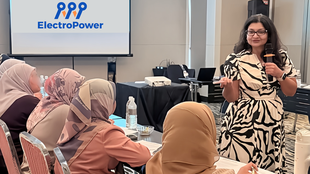
Migrants working at two different electronics factories recently joined a two-day ElectroPower training session in April 2026. Held in Penang, Malaysia, it included an overview of the electronics industry in Malaysia and the electronics supply chain, as well as key labour laws related to migrants' rights and to forced labour.
ElectroPower is an EU-funded project that aims to enhance worker-driven approaches to prevent and remedy forced labour in electronics supply chains in Asia. It provides support for trade union organising activities and works to strengthen collaboration between trade unions and civil society organisations. Using public procurement as a lever, ElectroPower is working towards fair and safe working conditions in the electronics industry in Indonesia, Malaysia and Thailand.
At the Penang training, workers and union leaders from different factories had the opportunity to compare conditions in their workplaces and analyse the risks of forced labour in its different forms. They discussed specific issues liked gender-based violence and harassment, union busting and occupational health and safety. They also shared how the union was engaging in one factory, offering practical insights and tips for the workers and organisers at a different site. The training enabled them to identify what constitutes forced labour and what doesn't by reviewing real-world examples.
Workers from both factories complained of union busting, and incidents where migrant workers had been fired because of their support for the union. One attendee had suffered retaliation for union activity and spoke about the impact this had on her. Omana George, Electronics Watch's Monitoring and Civil Society Engagement Manager, explained how workers can use Electronics Watch worker driven methodology to address their grievances. She highlighted options and limitations of using public procurement leverage to drive remedy.
Omana ran a second workshop in Kuala Lumpur for trade unions and civil society organisations (CSOs) to enable better cooperation between them. Five unions affiliated to IndustriALL attended along with CSOs Hopes Malaysia, Migration Dristi, and Migrant Workers' Network Bangladesh. They discussed the challenges facing even well-established local unions, and how migrant rights organisations can benefit from contact with unions when monitoring.
Olga Martin-Ortega, who is leading the ElectroPower research on forced labour joined both sessions and shared her human rights expertise. Olga had the opportunity to carry out interviews and focus group discussions with the migrant workers and trade unionists and gain a deeper understanding of forced labour situations in the ICT sector. In addition, she spoke to the CSOs present about their work to address forced labour. Electronics Watch affiliates can learn more about ElectroPower at our upcoming regional conference on December 15.

This article has been produced with the financial assistance of the European Union. The contents of this page are the sole responsibility of Electronics Watch and can under no circumstances be regarded as reflecting the position of the European Union.