
Corporate Leadership on Modern Slavery: Ten Years On
Electronics Watch and three affiliates were interviewed for new research by Hult International Business School, exploring the impact of the first decade of the UK Modern Slavery Act
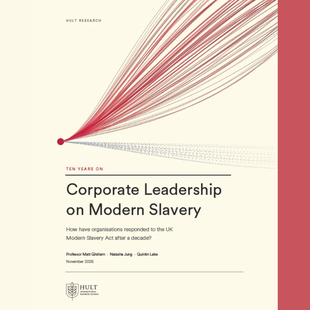
Electronics Watch and three of its affiliates – APUC, LUPC and UNISON – were interviewed for the recently published research report “Corporate Leadership on Modern Slavery: Ten Years On” by Hult International Business School. The research explores how corporate understanding and practice have evolved over the first decade of the UK Modern Slavery Act, and the role the Act has played in shaping that change.
Electronics Watch and its affiliates feature in the case study on p.117: "Pooling public purchasing power through shared due diligence and worker-driven monitoring". The case study explains how Electronics Watch supports public buyers to pool expertise, embedding human rights into tender and contract processes, and commissioning worker-driven monitoring collectively.
The Act has undoubtedly had a significant impact in raising awareness, but statements alone are not enough. Lasting, consistent change requires organisations to go further and invest in collaborative initiatives such as Electronics Watch. These initiatives should be considered an integral part of the solution—ideally supported, or even required, by legislation.
Other key findings from the research:
- 87% of executives believe modern slavery is likely to be occurring somewhere in their value chain, while 55% have identified actual or suspected cases in the past three years.
- 69% of respondents say it has increased senior leaders' attention to modern slavery in their organisation.
- Only 35% believe the Act has driven more consistent action across their industry, with the most committed organisations moving ahead of others.
- The most substantive action appears to be happening in sectors with strong collaborative initiatives, with 94% of respondents calling for better ways for organisations in the same industry to work together on human rights risks.
Read the full research report here.
The research is published as the UK Parliament is due to consider proposed changes to the act within the Immigration and Asylum Bill, and at a time when the government has also committed to review responsible business conduct in global supply chains as part of its Trade Strategy.