
Human rights risks INNER
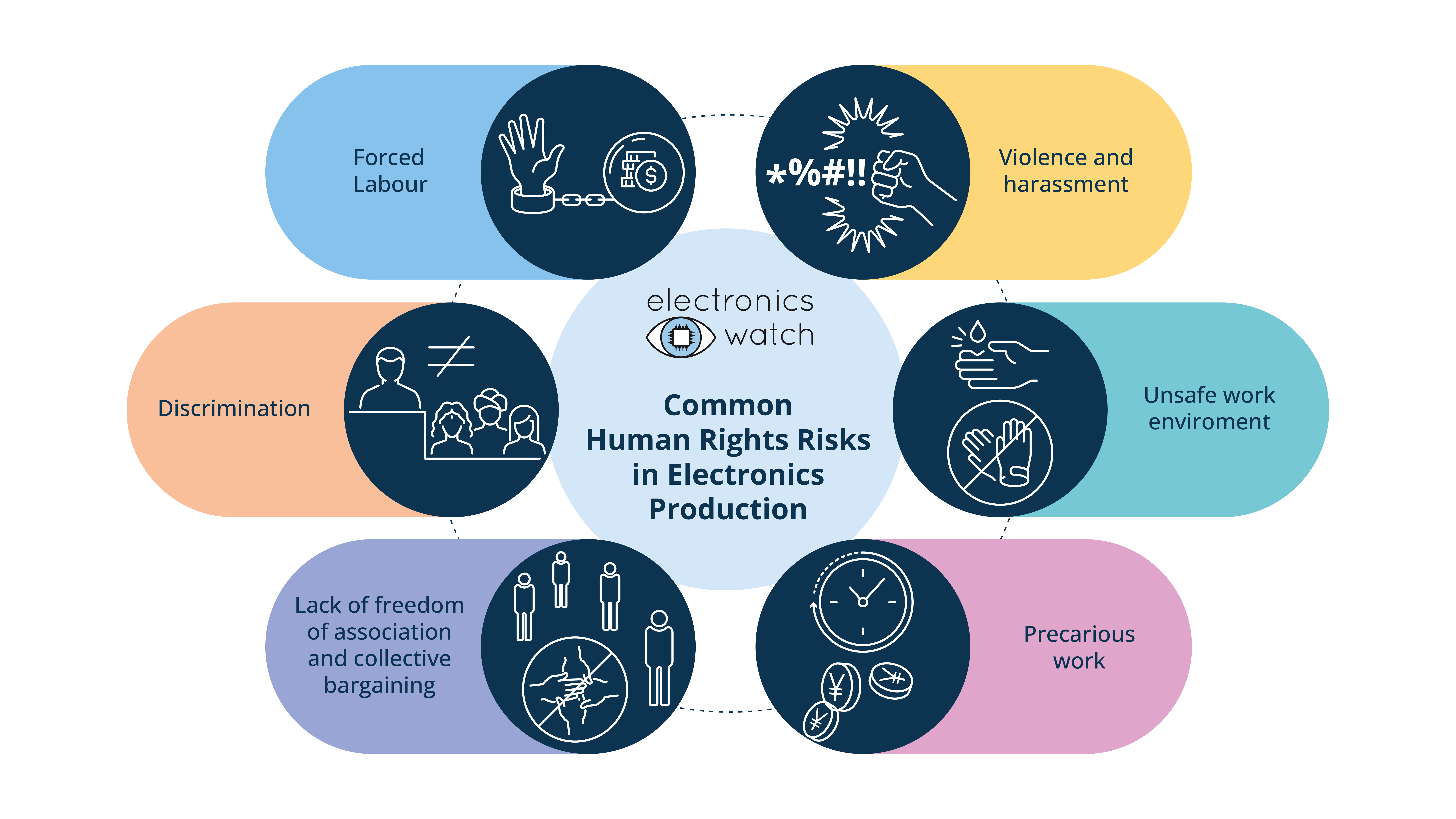
Specific human rights risks vary according to production factory or mine, its size, the products made or minerals extracted. Risks are also different depending on the country, brand and position in the supply chain.
While rare in electronics production, child labour is more common in mining. The ILO estimates that about 1 million children work in mining or quarrying, almost all in artisan small-scale mines. Many of the activities defined as “hazardous work” under international law occur in mining, which means mining is considered one of the worst forms of child labour.
The environmental impacts of mining are also considered a human rights risk. Mining can cause deforestation, alteration of the landscape and watersheds, and air pollution from airborne particles. Toxic chemicals are often used in the processing of minerals, and can damage the environment and are health hazards to both local communities and workers.