

Electronics Watch Featured at Recent Sustainable Procurement Conferences
Electronics Watch has got the word out at conferences on both sides of the Atlantic in recent months.
If you are a journalist, we look forward to hearing from you. We can keep you updated about labour rights in the global electronics industry.
Press contact: Harriet Edwards hedwards@electronicswatch.org
You can subscribe to our newsletter here.
Electronics Watch has got the word out at conferences on both sides of the Atlantic in recent months.
The UN Informal Interagency Task Team on Sustainable Procurement in the Health Sector (SPHS) has published Electronics Watch's recent report on public procurement and human rights due diligence on its platform, savinglivesustainably.org.
"Our overtime is forced work, forced overtime. When you refuse, there is a penalty, you are suspended, or the company threatens us with termination." —Electronics worker in Philippines, interview by the Center for Trade Union and Human Rights (CTUHR).
The risk of forced labour in the Philippine electronics industry is high, reports CTUHR, in its recent Regional Risk Assessment for Electronics Watch, soon available to Electronics Watch affiliates.
Electronics Watch is proud to welcome four new affiliates: The State of Vaud, the first Swiss affiliate; and the University of Bournemouth, University of Westminster, and Swansea University in the UK.
According to the International Labour Organization about 21 million men, women and children around the world work in conditions of slavery and forced labour today. Documented forced labour practices in the electronics industry include student "intern" workers in China who are forced to work as regular workers for one or two years in order to obtain their educational diplomas, and excessive recruitment fees and deceptive recruitment practices resulting in debt bondage among electronics workers in Malaysia.
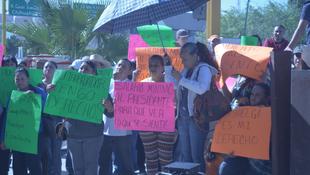
"Last year I suffered from hypotension. We worked five weeks in a row, weekends included, nonstop, so we could then exchange these days and get our December holidays. We were also working overtime. People got so burnt out they did not want to stay, simply because they could not stand it anymore. It was physically impossible to continue to work."
—Manuel, electronics worker, interview by CEREAL
On March 30, 2016 Apple released its 10th Supplier Responsibility Progress Report. Two days later, on April 1, the latest UK Higher Education Framework Agreement for Apple products went live. It includes the Electronics Watch Contract Conditions, which means that UK universities affiliated to Electronics Watch can now legally require their contractors to respect domestic and international labour standards in Apple's supplier factories.
Nottingham Trent University (UK), the City of Sant Boi de Llobregat in Catalonia (Spain), and Hanze University of Applied Sciences in Groningen (Netherlands), are the latest public institutions to affiliate to Electronics Watch, bringing the total number of 'founding members' up to 15.
The Mobile Social Congress, an alternative congress promoting a fairer electronics industry, took place on Tuesday 23 February in the afternoon at Casinet d'Hostafrancs in Barcelona. It is an initiative led by SETEM, Electronics Watch's partner in Spain, in collaboration with several organizations, including Amnesty International Catalonia, the Catalan network of organisation for the Democratic Republic of Congo, Fairphone, the telecommunications cooperative Eticom, the Polytechnic University of Catalonia (UPC) and the open telecommunications network Guifinet.
Electronics Watch will be present at the following events in March and May - if you're in the area, why not look us up!